Prompt engineering is the difference between AI producing random text and AI helping you write a structured, high-quality book.
If you have ever tried to write a full book with AI and ended up with repetitive chapters, shallow content, or inconsistent tone, the problem is not the AI — it is the prompt.
This guide explains how prompt engineering for writing books works, why most prompts fail, and how to design prompts that give you real control over long-form content.
What Is Prompt Engineering for Books?
Prompt engineering for books is the process of designing structured instructions that guide AI through:
- Long-form structure (chapters, sections, progression)
- Consistency of tone, voice, and style
- Avoiding repetition across chapters
- Maintaining logical and narrative continuity
Unlike short prompts for blog posts or social media, book prompt engineering requires systems, not sentences.
That is why generic prompts like “Write a book about X” almost always fail.
Why Most AI Book Prompts Fail
Most people approach AI book writing with prompts that are:
- Too short
- Too vague
- Focused only on output, not process
This leads to predictable problems:
- Repetition of ideas across chapters
- Inconsistent structure
- Filler content
- Loss of narrative or logical progression
AI needs constraints, memory simulation, and quality gates to perform well at book scale.
The 5 Core Layers of Book Prompt Engineering
1. The Book Bible
The Book Bible defines the foundation of your book before a single chapter is written.
It typically includes:
- Core premise and promise
- Target reader persona
- Tone and voice rules
- Point of view (POV)
- Style constraints
This layer prevents the AI from drifting as the book grows.
2. Structural Outline
A proper outline prompt does more than list chapter titles.
It defines:
- Chapter objectives
- What each chapter must achieve
- How chapters differ from one another
This ensures each chapter adds new value instead of repeating the same ideas.
3. Continuity and Repetition Control
Advanced prompt engineering introduces the concept of ledgers:
- Continuity Ledger: tracks facts, rules, characters, and definitions
- Repetition Ledger: tracks ideas, metaphors, and examples already used
This simulates memory and dramatically improves long-form quality.
4. Chapter Execution Templates
Instead of prompting each chapter from scratch, professionals use a reusable chapter template.
This keeps structure, pacing, and depth consistent across the entire book.
You can see a full real-world example in this case study:
How an Author Wrote a Complete Book in 14 Days Using AI
5. Quality Gates
Quality gates force the AI to self-check before moving forward.
Examples include:
- Novelty check (no repeated ideas)
- Clarity check
- Specificity check
- Structural check
This is how AI output moves from “drafty” to professional.
Prompt Engineering vs Writing Tools
Many tools advertise AI book writing, but most rely on shallow prompt logic.
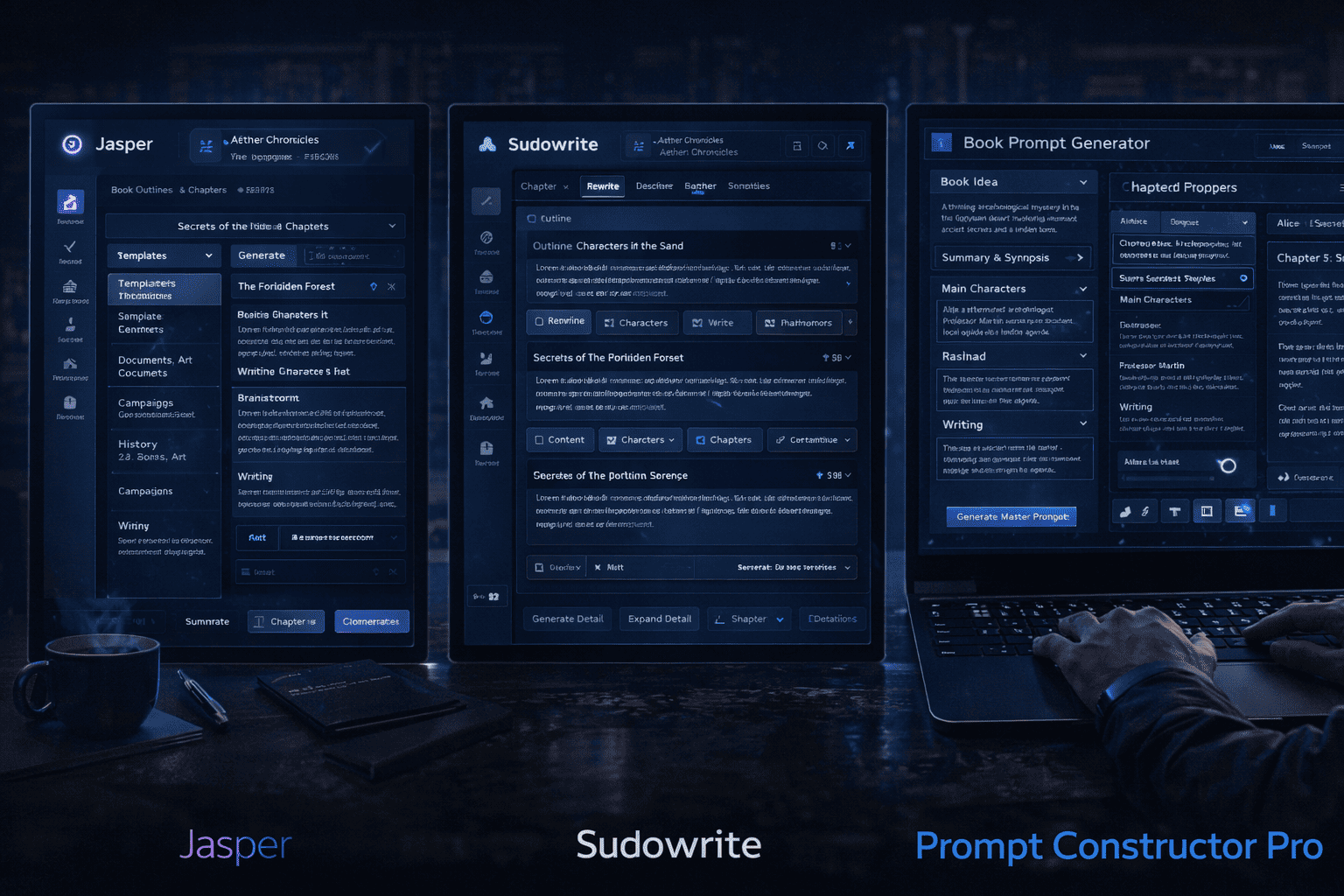
That is why authors quickly hit limits with tools like Jasper or Sudowrite.
A detailed comparison is available here:
Jasper vs Sudowrite vs Prompt Constructor Pro
The real advantage is not the AI model — it is the prompt system behind it.
Using Prompt Engineering to Write a Complete Book
When prompt engineering is done correctly, AI can:
- Write full non-fiction books
- Develop consistent fiction narratives
- Create educational manuals and training content
- Support enterprise-scale documentation
A complete walkthrough is available in this guide:
How to Write a Complete Book with AI
Tools Built for Prompt Engineering at Book Scale
Prompt engineering can be done manually, but it quickly becomes complex.
That is why tools like Prompt Constructor Pro exist: to systematise and automate this process.
Learn more about Prompt Constructor Pro
Download Prompt Constructor Pro
Frequently Asked Questions
Can AI really write an entire book?
Yes — if guided with proper prompt engineering and structure. Without it, results are inconsistent.
Is prompt engineering only for technical users?
No. Modern tools abstract the complexity while preserving control.
Does this work for fiction and non-fiction?
Yes. The principles apply to both, with different constraints.
Will AI replace authors?
No. AI amplifies authorship; it does not replace creative direction.
Final Thoughts
Prompt engineering is not a trick — it is a discipline.
If you want AI to help you write books instead of fragments, you need systems, structure, and control.
That is exactly what professional-grade prompt engineering provides.